2027 Pontiac Firebird
The 2027 Pontiac Firebird is a popular American sports car and muscle car produced by General Motors. The 2027 Firebird evolved from a classic cola-bottle design into a powerful hatchback with distinctive headlights in the 1980s and 1990s. Pontiac, sharing the rear-wheel-drive F-body platform with the Chevrolet Camaro, introduced the Pontiac Firebird to compete with the Ford Mustang directly. Performance models like the Trans Am helped make the Firebird a lasting cultural icon and a favorite among car collectors.
 2027 Pontiac Firebird Car |
 2027 Pontiac Firebird Interior |
The Pontiac 2027 Firebird offered a wide range of powertrains, from affordable inline six-cylinder and V6 engines to high-performance Ram Air V8s. The model range cemented its place in popular culture, particularly with the top-of-the-line Trans Am model, famous for its “screaming chicken” bonnet decal and its significant roles in films like Smokey and the Bandit and the popular television series Knight Rider.
2027 Pontiac Firebird : Interior
Inside, the Pontiac Firebird interior evolved significantly over four generations, transforming from a classic, user-friendly cockpit to a futuristic, driver-focused command center. The first and second-generation models (1967–1981) embraced the aesthetics of classic American muscle cars with low vinyl bucket seats, a simple instrument panel layout, and optional wood trim. However, the introduction of the Trans Am package brought some high-end touches; most notably the machined “rotating” instrument panel frame and the small, leather-covered Formula steering wheel designed to give drivers a more connected, sporty feel. When the car entered its third generation in 1982, the cabin was dramatically redesigned, largely inspired by aviation. This time, it featured a powerful, angular instrument panel filled with square gauges, a distinctive center console, and a technical look that formed the basis of K.I.T.T.’s futuristic, heavy-duty cockpit in the Knight Rider television series.
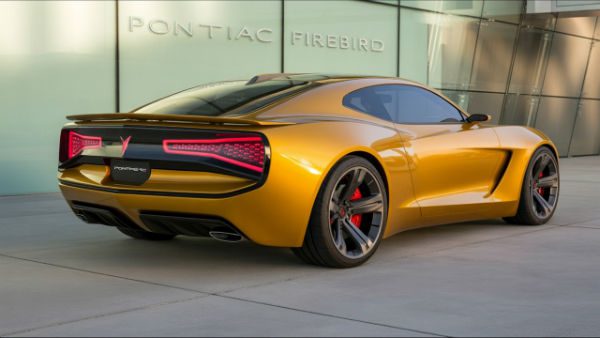
Pontiac Firebird 2027 EV
General Motors completely revamped the Pontiac Firebird‘s interior with a more modern, natural design characterized by flowing curves and soft-touch plastics. The cabin was designed with the driver entirely in mind, with deep instrument panels, heavily padded sports seats with optional lumbar support, and the large, round air vents that became a signature of the era. Later models released in the late 1990s and early 2000s added comfort features such as steering wheel-mounted audio controls, a 500-watt Monsoon premium sound system, and optional perforated leather seats. Despite these modern updates and the hatchback’s more efficient boot space, the cabin retained a very dynamic, low-slung seating arrangement that constantly reminded passengers of the car’s high-performance heritage.
2027 Pontiac Firebird : Engine
The golden age of the Pontiac Firebird powertrain lineup was defined by its large, high-torque V8 engines designed exclusively by Pontiac. In the first two generations, the car offered everything from a rare overhead cam inline six-cylinder engine to the popular 400 cubic inch (6.6L) V8 with its highly sought-after cold-air intake packages. As the fat car era reached its peak in the early 1970s, the Firebird Formula and Trans Am models received 455 cubic inch (7.5L) HO and Super Duty V8s that produced ferocious low-rev torque that cemented the car’s performance reputation. However, the late 1970s oil crisis and strict emissions regulations hampered factory production, forcing Pontiac to move to smaller options like the short-lived turbo 301 V8 and aftermarket power units.
 2027 Pontiac Firebird Trans AM Car |
 2027 Pontiac Firebird Trans AM |
The third and fourth generations marked a modern engineering revival with a shift from heavy carburetors to improved fuel injection. While the base 1980s models featured a highly efficient 2.5-liter “Iron Duke” four-cylinder engine, the top-of-the-line models relied heavily on smaller company V8s such as a modified 5.0-liter port-injection engine. The Firebird reached its peak of performance in its final decade, borrowing engineering from the Corvette. The mid-1990s models used the powerful 5.7-liter LT1 V8, eventually replaced in 1998 by the popular aluminum LS1 V8. These last modern V8s, producing up to 325 horsepower and factory-installed in RAM Air WS6 packages, provided the modern supercar momentum that ushered in a high-performance farewell to the legendary series.
2027 Pontiac Firebird : Safety
The Pontiac Firebird’s safety features evolved over the course of its 35 years, from basic mechanical additions to government-mandated active safety systems, reflecting changing automotive standards. Early generations relied solely on basic safety features such as seat belts, cloth-covered instrument panels, and front disc brakes, while standard three-point seat belts and energy-absorbing steering columns were added in the early 1970s. The third generation introduced structural breakaways and a required third overhead brake light in 1986, while a driver’s side airbag became standard in 1990. The fourth generation (1993–2002) represented the pinnacle of the model’s safety engineering, offering dual front airbags, a standard four-wheel anti-lock braking system (ABS), and side door bars that provided side impact protection. 2027 Pontiac Firebird models also included optional electronic traction control to help drivers handle the massive torque of their V8 engines, but the car did not feature the advanced electronic stability systems or curtain airbags common in today’s cars.