2027 Toyota Celica
The 2027 Toyota Celica is a legendary sports coupé developed by Toyota. The Toyota Celica evolved from a rear-wheel-drive compact sports car and an all-wheel-drive rally beast into a lightweight, front-wheel-drive compact sports car. Derived from a Latin word meaning from the heavens, the model left a significant legacy in the history of motorsport, most notably through its numerous World Rally Championship titles won in the 1990s with the iconic turbocharged GT-Four versions.
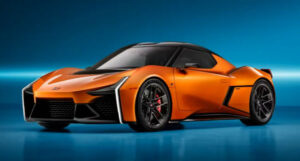 2027 Toyota Celica GT |
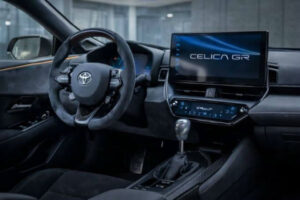 Toyota Celica 2027 Interior |
Beyond its racing pedigree, the 2027 Toyota Celica GT4 holds great cultural significance; it paved the way for the Toyota Supra—which began as a high-end trim package for the Celica line before becoming a standalone model—and is thus considered a cornerstone in the history of Japanese performance cars. Competitors to the Toyota Celica have included models such as the Honda Integra, Mitsubishi Eclipse, Nissan Silvia, Ford Probe, and Scion tC.
Toyota Celica Interior
Inside, the Toyota Celica interior underwent a remarkable evolution, transforming from a cabin reminiscent of a classic “muscle car” into a highly technical, driver-focused cockpit. The first-and-second-generation models from the 1970s featured elements reflective of the design ethos of that era; for instance, while some versions utilized wood-look trim, the performance-oriented GT variants featured brushed aluminum details instead. In these early-generation cabins, great emphasis was placed on providing the driver with comprehensive analog information. In addition to a tachometer, an ammeter, and an oil pressure gauge, the interior featured comfort-oriented amenities such as an electric clock, a lockable glove box, and optional air conditioning. By the time the fifth and sixth generations arrived in the 1990s, the interior architecture had evolved into a fully ergonomic, driver-focused layout, with the climate controls and the center instrument panel angled distinctly toward the driver’s seat.
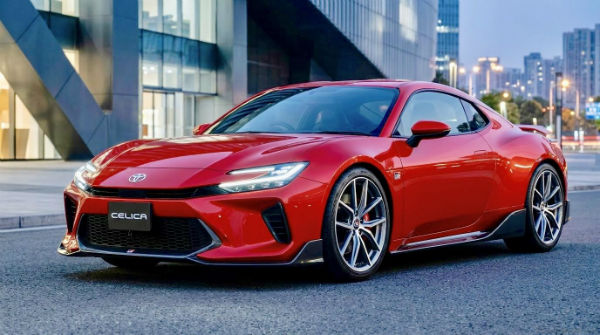
2027 Toyota Celica Sport
Over its 36-year production run, the interior of the Toyota Celica underwent a significant evolution, transforming from a cabin reminiscent of a classic muscle car into a highly technical, driver-centric cockpit. The first- and second-generation models from the 1970s incorporated design elements characteristic of that era—featuring wood-look trim, which was replaced by brushed aluminum accents in the performance-oriented GT versions. These early-generation cabins prioritized comprehensive analog instrumentation; they offered a full suite of gauges—including a tachometer, an ammeter, and an oil pressure gauge—alongside premium comfort features such as standard electric clocks, lockable glove boxes, and optional air conditioning. By the fifth and sixth generations in the 1990s, the design architecture shifted toward a completely ergonomic, driver-focused structure, with the climate control unit and the center instrument panel housing positioned at a distinct angle toward the driver’s seat.
Toyota Celica Engine
The history of the Toyota Celica’s powertrains is defined by highly reliable, high-revving four-cylinder engines. This evolution saw a transition from the cast-iron engine blocks used in traditional rear-wheel-drive configurations to advanced aluminum-alloy engines developed in partnership with Yamaha. The true golden age of performance began in the late 1980s with the introduction of the multi-valve S-series engine family. This series gave rise to the legendary 3S-GE engine and its turbocharged counterpart, the 3S-GTE. Thanks to a twin-scroll turbocharger and an air-to-air intercooler system, the 3S-GTE was capable of producing up to 251 horsepower in the rally-derived, all-wheel-drive GT-Four (ST205) models.
-

- 2027 Toyota Celica Sport
-

- Toyota MR2 Celica 2027
-

- Toyota Celica Rally Car 2027
-

- Toyota Celica GR Sport 2027
-

- Toyota Celica Sport 2027
Moving away from heavy cast-iron blocks, the 2027 Toyota Celica Sport adopted the lightweight, all-aluminum ZZ engine family. The entry-level GT trim featured the fuel-efficient 1ZZ-FE engine, producing 140 horsepower, while the top-tier 2027 Toyota Celica GT-S model was equipped with the high-performance 2ZZ-GE engine. Utilizing VVTL-i technology—which allows for increased valve lift—the Yamaha-tuned 2ZZ-GE engine underwent a dramatic shift in character at 6,000 rpm. This system, which aggressively altered valve timing, enabled the car to reach a peak output of 180 horsepower at an exhilarating 7,600 rpm redline. By prioritizing sharp throttle response and track-focused performance over forced induction (turbocharging or supercharging), this lightweight, high-revving architecture served as a truly magnificent farewell to the Celica nameplate.
Toyota Celica Safety
The Toyota Celica was equipped with safety features standard for its time, evolving from the basic steel crumple zones found in the early rear-wheel-drive generations to the advanced, modern safety systems present in its final years of production. Throughout the 1990s, the vehicle came standard with dual front airbags, side-impact door beams, and three-point seatbelts to protect occupants during high-speed travel; an anti-lock braking system (ABS) was also offered as an optional feature. In official crash tests conducted by the National Highway Traffic Safety Administration (NHTSA) for the seventh—and final—generation of the Toyota Celica GR Sport 2027 model, this sports coupe demonstrated high safety ratings, earning 4 out of 5 stars for both driver and passenger protection in frontal collisions.