2026 Citroen DS Pallas
The 2026 Citroen DS Pallas is a reinterpretation of the 1955 French classic car produced by Citroën. The 2026 Citroen Pallas is designed to combine modern aesthetics with the electric or hybrid technology of the future. The Citroen DS Pallas features a “floating” fastback body, a suspension focused on increased comfort, and a small, saloon-like cabin, although some reports suggest a more efficient EV setup.
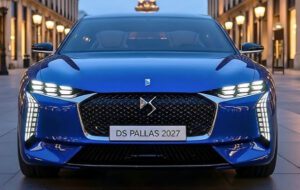 Citroen Pallas 2027 Car |
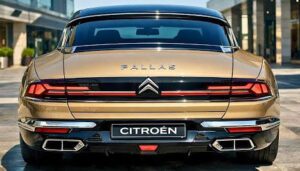 2027 Citroen Pallas DS |
The design features a “shark nose” front end with very small LED headlights, an illuminated V emblem, and a long, sculpted bonnet. It boasts a fastback roofline with soft-touch door handles and 22-inch aerodynamic wheels. The Citroën DS Pallas offers electric powertrains; some reports suggest a turbocharged hybrid system might be possible by combining two fully electric motors that together produce over 100 horsepower.
Citroen DS Pallas: Interior
Designed as a premium version of the popular Citroën DS, the interior of the DS Pallas offers a refined, “salon-like” feel that goes far beyond standard models, emphasizing comfort and avant-garde style. Pallas models feature upgraded features, including high-quality velvet or leather upholstery, improved sound insulation, thicker carpeting, and unique stainless steel details. The cabin is characterized by a cool feel thanks to its spacious green cab, wide, sofa-like seats with adjustable headrests that prioritize comfort on long journeys, and grab handles sometimes found on the B-pillars.
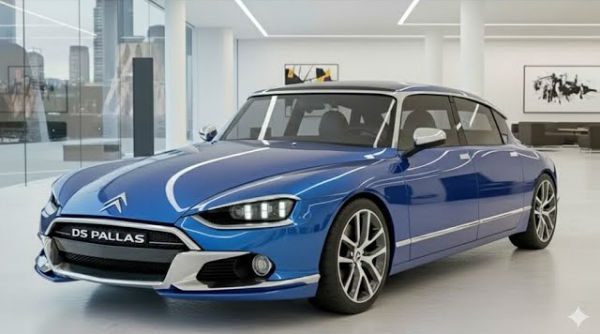
2026 Citroen DS Pallas Car
The instrument panel is a functional design element, often featuring a distinctive, single-spoke steering wheel that provides an unobstructed view of the gauges, from early rectangular instrument panels to later rotary gauges. Pallas equipment adds further sophistication with distinctive door panels, often meticulously crafted with delicate pleating, improved door insulation, and additional ambient comfort features. The overall design is deliberately “non-automobile-like,” offering a unique driving experience where the instrument panel, controls, and cabin layout combine advanced (for now) ergonomics with a forward-thinking aesthetic approach.
Citroen DS Pallas : Engine
The Citroën DS Pallas was powered by a range of robust or conventional inline four-cylinder engines developed throughout its production period to deliver improved performance, from the 1.9-liter engine in the DS19 to the 2.1-liter in the DS21 and the 2.3-liter in the DS23. Known more for their reliability than their high performance, these engines were paired with improved hydraulic, automatic, or 5-speed manual transmissions. A defining feature of the engine bay was the front-mounted spare tire, positioned above the engine, which was mounted behind the front axle for better weight distribution.
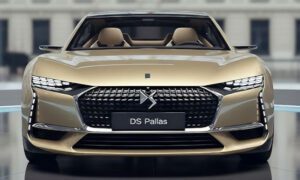 2026 Citroen DS Pallas |
2027 Citroen Pallas DS |
The DS21 Pallas featured a 2.1-liter engine producing approximately 108-109 horsepower, and was later upgraded with Bosch electronic fuel injection for smoother operation and increased power. This engine, working in conjunction with a variable, self-leveling hydropneumatic suspension system, delivered a smooth ride often described as a “magic carpet” experience. The Pallas trim further enhanced this experience with improved sound insulation, helping to mask the lively nature of the four-cylinder engine and making it a comfortable and relaxed grand tourer.
Citroen DS Pallas : Safety
The Citroen DS 21 and 23 Pallas featured advanced, practical safety engineering that made them among the safest and most stable cars of their time. Key features included variable hydropneumatic suspension, allowing the car to maintain control even in case of a tire blowout or at high speeds, and hydraulically assisted internal disc brakes for superior stopping power. While the Pallas trim offered superior comfort, safety was enhanced with new features such as self-leveling drive, optional seatbelts, and a unique single-spoke steering wheel designed to reduce injuries in accidents. Furthermore, from the late 1960s onwards, the Pallas featured direct headlights that illuminated corners before the vehicle turned, providing excellent night vision. The car’s reputation for safety was further enhanced in 1962 when President de Gaulle survived an assassination attempt despite all four of its tires bursting, demonstrating its ability to maintain control under extreme conditions.