2027 Suzuki Samurai
The 2027 Suzuki Samurai is a compact, lightweight SUV with four-wheel drive (4×4), based on the Suzuki Jimny series. 2027 Suzuki Samurai will available only as a digital concept created by fans and as a subject of online rumors. Suzuki has made no official statement or confirmation regarding the revival of the Samurai name. Equipped with a small 1.3-liter, four-cylinder engine producing approximately 63–68 horsepower, this lightweight, compact mini-SUV achieved significant commercial success—priced at roughly two-thirds the cost of a Jeep Wrangler of that era—and eventually became a true “cult” classic.
 Suzuki Samurai 2027 |
 2027 Suzuki Samurai Interior |
Featuring a robust ladder-frame chassis, a genuine part-time four-wheel-drive system, manually locking hubs, and solid axles, the Suzuki Samurai sacrificed on-road comfort and speed to deliver “virtually unstoppable” off-road capability. Key competitors to the Suzuki Samurai included the Jeep Wrangler (YJ), Geo Tracker, Suzuki Sidekick, Daihatsu Rocky, and Isuzu Amigo. The Suzuki Samurai, which initially launched in the U.S. with a starting price of $6,550, now holds collector value; well-preserved or restored examples can fetch between $10,000 and $25,000 at auctions today.
2027 Suzuki Samurai Interior
The interior of the Suzuki Samurai was designed with a simple, practical approach that prioritized functionality over luxury. To keep costs low and ensure durability against water exposure during off-road adventures, the base trim featured vinyl-upholstered seats, exposed metal surfaces, and a highly minimalist equipment list. Moving up to the “Deluxe JX” trim offered a bit more comfort: the cabin featured full carpeting, fabric-upholstered seats with taller headrests, a digital clock, a tachometer, and a sporty three-spoke steering wheel. While a two-stage ventilation and heating system came standard on all versions, factory-installed air conditioning and an AM/FM cassette audio system were available as optional extras.
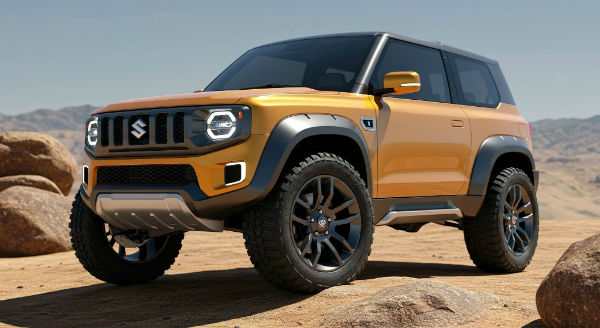
2027 Suzuki Samurai SUV
Suzuki significantly updated the vehicle’s interior. Specifically, the seats were redesigned to provide better body support and improved lumbar comfort. This change helped to slightly soften the vehicle’s ride—a characteristic that had previously drawn considerable criticism for being overly harsh. Additionally, the old dashboard was replaced with a new, simpler, and more functional gray-colored unit. It featured large, round, easy-to-read gauges set against a white background. Clever design solutions allowed for maximum utilization of the interior space in this compact 4×4 vehicle: the rear seat could be reclined, folded completely forward, or removed from the vehicle entirely via the large rear door, creating ample room for cargo. Due to federal safety standards requiring shoulder belts for rear-seat passengers, the rear seats were eliminated entirely starting in 1994. Consequently, during its final two years on the U.S. market, the Samurai became a two-seater vehicle.
2027 Suzuki Samurai Engine
The Suzuki Samurai engine is a lightweight, 1.3-liter (1,298 cc) inline four-cylinder unit constructed from an aluminum alloy. Mounted longitudinally in the engine bay, it featured a single overhead camshaft (SOHC) configuration, an electronically controlled two-barrel Mikuni carburetor, and an eight-valve cylinder head. This setup produced 63–64 horsepower and 74 lb-ft (approximately 100 Nm) of torque. For the 1990 model, Suzuki updated the engine by incorporating an electronic fuel injection system (TBI—throttle body injection) and slightly adjusting the displacement. As a result, the engine’s output increased to 66–68 horsepower. Power was delivered through a five-speed manual transmission, which was coupled with a synchronized manual transfer case. This allowed drivers to switch between different drivetrain modes while in motion: 2WD (rear-wheel drive), 4WD High, and 4WD Low.
 2027 Suzuki Samurai Mini |
 2027 Suzuki Samurai Cena |
Designed for durability rather than high speed, the G13 series engines focused on delivering high torque at low RPMs while maintaining an extremely lightweight construction. This helped maximize the power-to-weight ratio of the compact 4×4 vehicle. Although the Samurai struggled at higher speeds—requiring the engine to run at high RPMs to maintain, for instance, 65 mph (approximately 105 km/h)—it excelled in off-road conditions, particularly when executing complex maneuvers in low gear. This performance was supported by its straightforward mechanical reliability and a highly efficient cooling system. The simplicity of its design, the absence of complex computer systems, and the ample space within the engine bay made the Samurai an excellent platform for enthusiasts who enjoy performing their own maintenance and modifications. Although the original G13 engine is highly regarded by enthusiasts for its ease of maintenance, those seeking more power often prefer to replace it with the larger, 16-valve, fuel-injected engine found in Suzuki Sidekick models.
2027 Suzuki Samurai Safety
The safety of the Suzuki Samurai became a contentious issue following an evaluation by Consumer Reports, which deemed the vehicle not acceptable due to the risk of rollovers during emergency maneuvers. While a narrow track width and a high center of gravity made the lightweight 4×4 less stable during sharp turns, the NHTSA ultimately declined to issue a recall, concluding that the vehicle’s rollover rate was consistent with that of other commercial vehicles of the era. The resulting media outcry led to an immediate decline in sales and prompted Suzuki to file a defamation lawsuit. The case concluded with a settlement in which Consumers Union acknowledged that the Samurai was safe under normal driving conditions.